
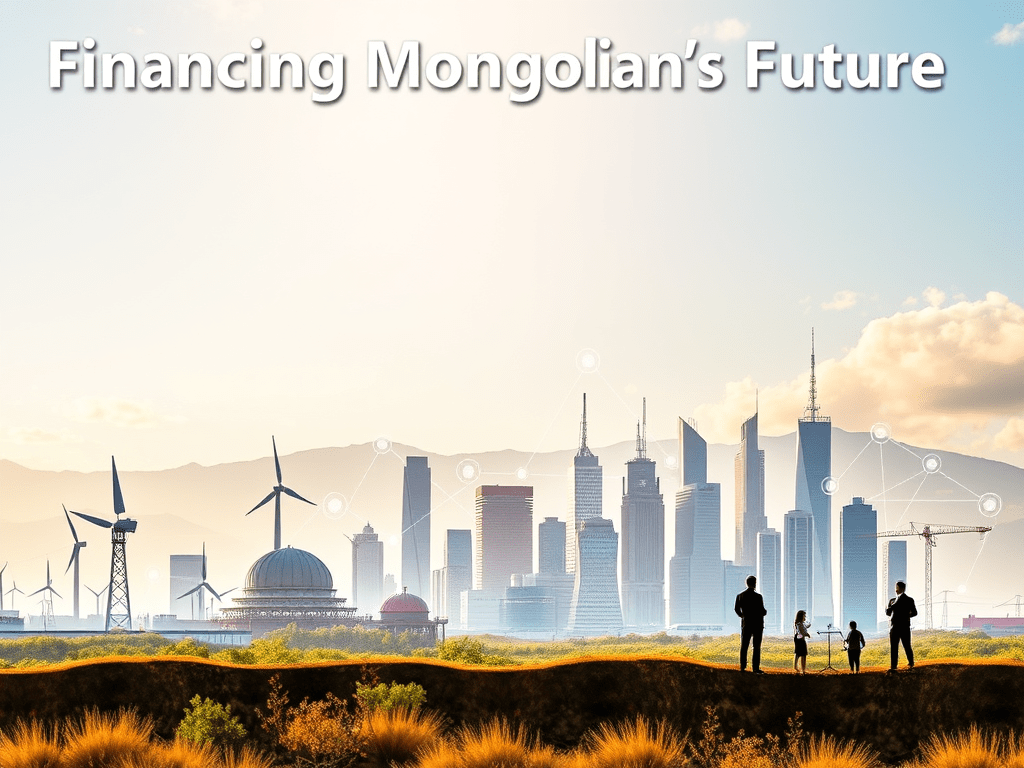
As Mongolia embarks on its ambitious development journey outlined in the 2024–2028 Government Action Plan, a critical question arises: How will we pay for it all?
From infrastructure and digital connectivity to climate resilience and education, the scale of financing required is significant. Yet Mongolia is not without options. The key lies in a diversified, strategic approach that leverages both domestic strengths and international partnerships.
Here’s how Mongolia can finance its national development priorities:
1. Blended Finance & Public-Private Partnerships (PPPs)
The government must engage private capital by sharing risks through blended finance mechanisms. This includes co-financing infrastructure projects with concessional loans from multilateral development banks (MDBs) and unlocking private equity through transparent PPP frameworks.
Example: Renewable energy plants or cross-border railways co-financed by ADB, EBRD, and private investors.
2. Sovereign, Green & Diaspora Bonds
Mongolia’s track record in sovereign bond issuance (e.g., “Chinggis,” “Khuraldai”) proves it can raise capital on global markets. The next step is innovation:
- Green bonds to fund climate-resilient infrastructure.
- Diaspora bonds to tap into national pride and global Mongolian capital.
- Blue bonds for sustainable water and fisheries projects.
3. Bilateral and Multilateral Development Finance
Partners like Japan, South Korea, China, and the EU, along with MDBs such as the World Bank and ADB, offer long-term concessional finance, technical assistance, and risk guarantees.
Strategic use of these funds for education, healthcare, and logistics will have a multiplier effect.
4. Foreign Direct Investment Beyond Mining
While the mining sector continues to dominate, FDI can be unlocked in other sectors with the right policy signals:
- Tourism
- Agribusiness
- Logistics and free trade zones
- Renewable energy
What’s needed? Legal predictability, improved land use rights, dispute resolution reforms, and investor confidence.
5. Domestic Financial System Reform
The Development Bank of Mongolia (DBM) must evolve into a credible, catalytic institution — one that finances commercially viable projects while maintaining governance and credit discipline.
Meanwhile, developing domestic capital markets (including a healthy sovereign bond yield curve and local institutional investors) can channel long-term funds toward national development.
6. Sovereign Wealth Fund & Resource Revenues
Mongolia’s proposed Sovereign Wealth Fund can play a stabilizing role if it’s built on transparency and fiscal discipline. Properly governed, it can reinvest mining windfalls into long-term infrastructure and social development.
7. Innovative Financing Tools
While early-stage, Mongolia can start experimenting with:
- Impact investing for SDG-aligned projects
- Crowdfunding for startups and small enterprises
- Tokenized finance and blockchain-based asset tracking
Final Thoughts:
Financing Mongolia’s future will not come from one silver bullet, but from a mosaic of solutions: smarter policies, better institutions, and stronger partnerships.
It’s time to move from short-term fixes to long-term financial architecture that supports inclusive, sustainable growth.
 Quarter Century
Leave a comment